
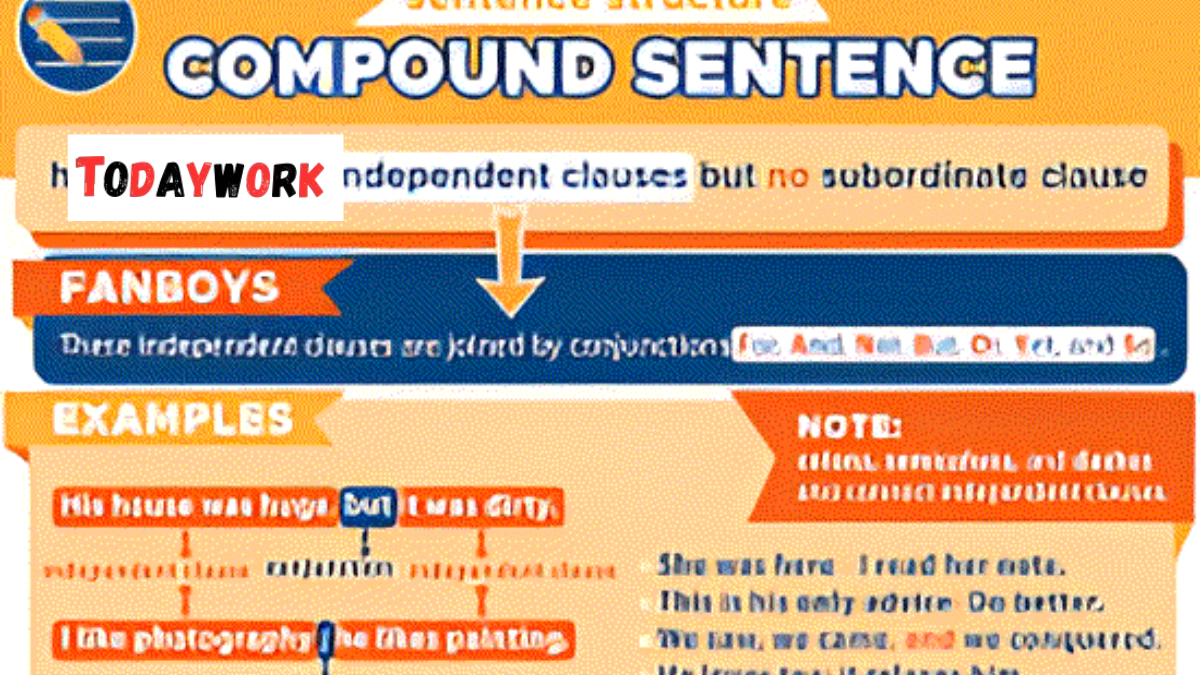
A compound sentence is one of the fundamental building blocks of effective writing. It is a sentence that contains two or more independent clauses joined together to express related ideas. Unlike simple sentences, which only contain a single idea, compound sentences allow writers to connect thoughts, show relationships, and provide greater clarity in their writing. Understanding compound sentences is essential for anyone looking to improve both their academic and professional writing skills.
The significance of compound sentences lies not only in grammar but also in their impact on readability and flow. Using compound sentences strategically helps avoid choppy, disconnected statements, creating a smoother reading experience for the audience. For instance, rather than writing two separate sentences—“I went to the store. I bought some fruits”—a compound sentence combines them: “I went to the store, and I bought some fruits.” This structure communicates the same idea more cohesively.
It is also important to distinguish compound sentences from other sentence types, like simple or complex sentences. While simple sentences consist of one independent clause, and complex sentences mix independent and dependent clauses, compound sentences strictly combine multiple independent clauses. Mastering the use of compound sentences is crucial for writers aiming to convey ideas clearly, maintain audience engagement, and develop a sophisticated writing style.
Ultimately, understanding compound sentences provides a foundation for more advanced sentence structures. Writers who can effectively employ compound sentences not only improve grammar accuracy but also enhance content flow, logical connections, and overall readability, which are essential for both print and digital writing.
Understanding the Structure of a Compound Sentence
The backbone of a compound sentence is the independent clause, which is a group of words containing a subject and a predicate that expresses a complete thought. A compound sentence is created when two or more independent clauses are joined together to form a single, unified statement. This combination allows writers to connect related ideas and emphasise relationships between actions, events, or arguments.
The most common method for joining independent clauses is through coordinating conjunctions, often remembered using the acronym FANBOYS (for, and, nor, but, or, yet, so). For example, in the sentence “I wanted to go for a run, but it started raining,” the two independent clauses are connected by the conjunction “but” to indicate contrast. The choice of conjunction directly influences the tone, meaning, and flow of the sentence.
Punctuation also plays a crucial role in compound sentences. A comma is typically used before the coordinating conjunction when joining clauses. Alternatively, semicolons can connect clauses without conjunctions, especially when the clauses are closely related. For instance, “I finished my homework; I went out to play” is a grammatically correct compound sentence that demonstrates independence and clarity between two ideas. Understanding how punctuation interacts with sentence structure is critical for avoiding common writing mistakes such as comma splices or run-on sentences.
By mastering the structure of compound sentences, writers gain the ability to construct sentences that are not only grammatically correct but also stylistically effective. This knowledge forms the foundation for improving writing clarity, adding variety to sentence length, and enhancing the overall quality of any text.
Types of Compound Sentences
Compound sentences can take multiple forms depending on how clauses are connected. The first type is compound sentences joined by coordinating conjunctions. This is the most common and widely taught structure, utilising conjunctions like “and,” “but,” or “so” to connect independent clauses. For example, “She wanted to travel, and he preferred to stay home.” These sentences are easy to read, versatile, and suitable for everyday writing.
Another form involves compound sentences connected using semicolons. This structure is often used when writers want to link closely related ideas without a coordinating conjunction. For instance, “The sun was setting; the sky turned orange.” Semicolon-connected sentences are particularly useful in academic or formal writing, where maintaining flow and emphasis is important.
A third type is compound sentences with conjunctive adverbs, such as “however,” “therefore,” or “meanwhile.” These adverbs are typically preceded by a semicolon and followed by a comma: “I wanted to attend the meeting; however, I was stuck in traffic.” This form highlights a relationship between clauses more explicitly, such as contrast, cause, or sequence.
Finally, compound sentences with correlative structures use pairs like “either…or” or “neither…nor.” For example, “You can either join the club, or you can work on your project.” Correlative constructions provide balance and rhythm to writing, making ideas feel more connected and deliberate. Understanding these types allows writers to vary sentence structures, enhancing both style and readability in any content.
Rules and Common Mistakes in Compound Sentence Formation
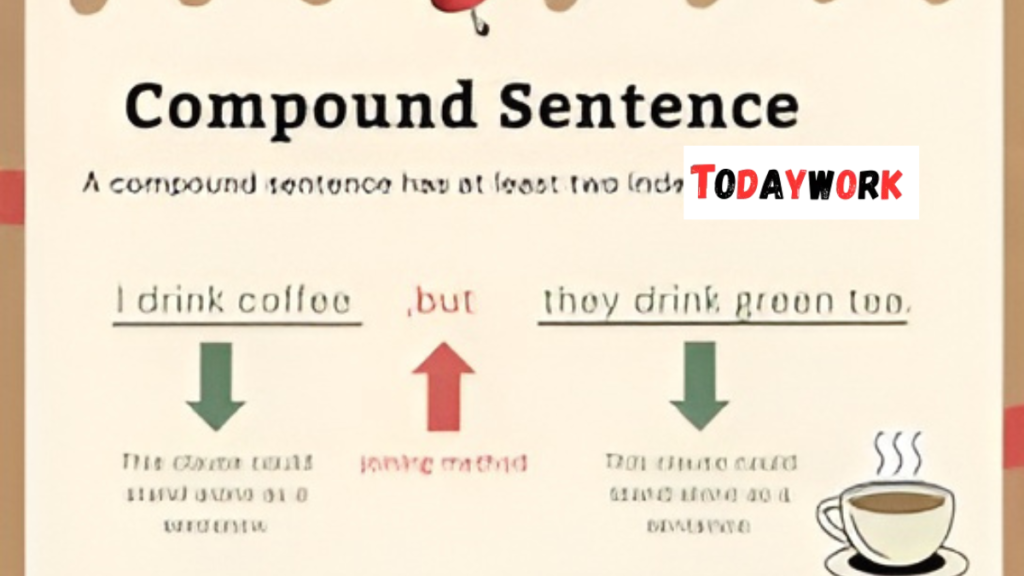
While compound sentences offer flexibility, writers must follow certain rules to avoid grammatical errors. One of the most important rules is correct comma placement. A comma should precede the coordinating conjunction when linking two independent clauses: “I wanted to read a book, but I fell asleep instead.” Omitting the comma can confuse readers or create a run-on sentence.
Another common mistake is the comma splice, where two independent clauses are joined with only a comma and no conjunction: “I went to the store, I bought milk.” This is grammatically incorrect and should be corrected either with a coordinating conjunction or a semicolon: “I went to the store, and I bought milk” or “I went to the store; I bought milk.”
Semicolons and transitional words are another area where mistakes occur. Writers must remember that semicolons can only link clauses that are independent and closely related. Additionally, transitional words like “however” or “therefore” must be preceded by a semicolon and followed by a comma. Misuse can disrupt sentence clarity and readability.
Finally, writers should maintain balance between clauses to avoid awkward or confusing sentences. Each clause should be equally important, and the relationship between ideas should be clear. Following these rules ensures that compound sentences remain effective tools for improving flow, emphasising relationships, and creating variety in writing.
Conclusion
Compound sentences are a crucial element of English writing, offering flexibility, clarity, and style. By connecting independent clauses, they allow writers to express complex ideas clearly, maintain logical flow, and engage readers effectively. Mastering their structure—including the use of conjunctions, semicolons, and proper punctuation—is essential for both academic and professional writing.
Understanding the types of compound sentences and avoiding common mistakes like comma splices can significantly improve writing quality. Whether in storytelling, academic essays, or digital content, compound sentences enhance readability and add variety to sentence structures. Writers who practice using compound sentences strategically are better equipped to create compelling, polished, and professional content.
Incorporating compound sentences thoughtfully strengthens overall writing, making it more coherent and enjoyable for readers. With practice and attention to grammar, anyone can master compound sentences and elevate their written communication to a higher level of clarity and sophistication.
Frequently Asked Questions
What is a compound sentence in simple terms?
A compound sentence is a sentence that joins two or more independent clauses with a coordinating conjunction, semicolon, or conjunctive adverb. It connects related ideas in a single sentence.
How many clauses are in a compound sentence?
A compound sentence contains at least two independent clauses, each capable of standing alone as a complete sentence.
Can a compound sentence have more than two clauses?
Yes, compound sentences can have multiple independent clauses connected together, allowing complex ideas to be expressed clearly.
What conjunctions are most commonly used in compound sentences?
The most common conjunctions are FANBOYS: for, and, nor, but, or, yet, and so.
How do you avoid errors when writing compound sentences?
Use proper punctuation, avoid comma splices, and ensure each clause is independent. Choosing the right conjunction helps maintain clarity.
Are compound sentences suitable for formal writing?
Yes, compound sentences are appropriate for formal writing, especially when clarity and logical connections between ideas are important.
Also Read: brandon fugal net worth