
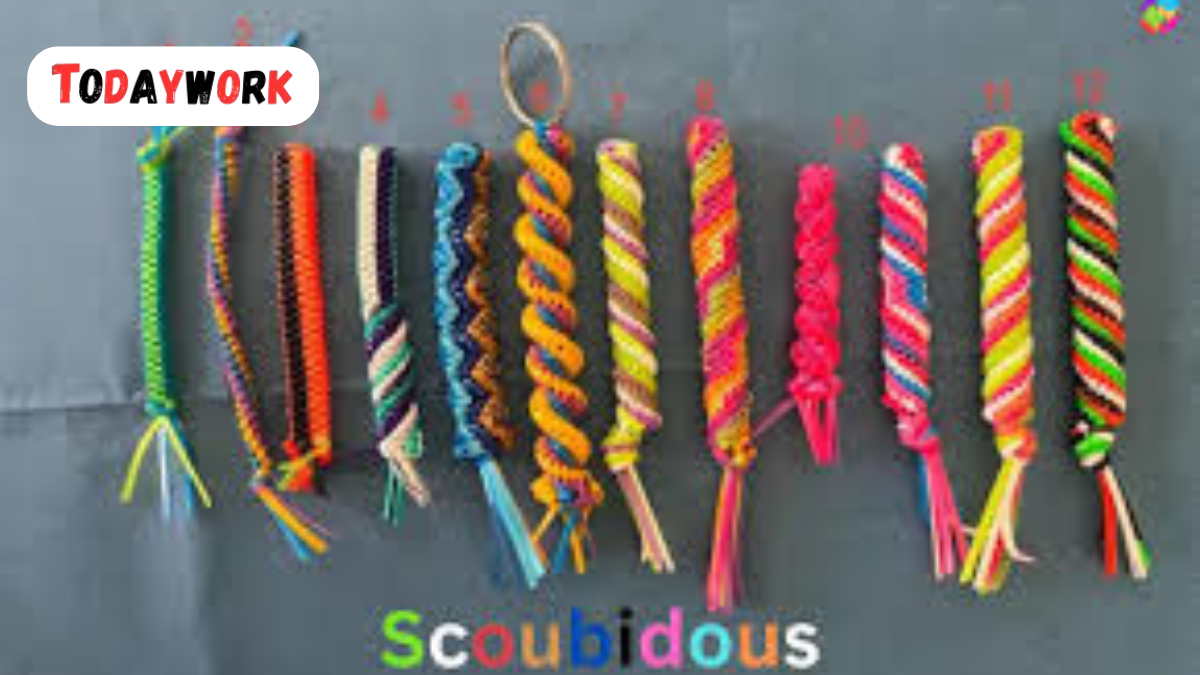
Scoubidous are vibrant plastic cords that have fascinated hobbyists and children for generations. This craft involves knotting and weaving colourful strands into keychains, bracelets, and decorative figures, making it both a fun and creative pastime. Scoubidous are accessible to beginners and enjoyable for advanced crafters alike, offering an outlet for artistic expression and personalisation.
The versatility of scoubidous makes it an enduring favourite in craft communities. With simple cords, anyone can create intricate patterns or playful designs. Beyond entertainment, scoubidous also help improve hand-eye coordination, patience, and fine motor skills, making them a perfect activity for schools, summer camps, and family craft sessions.
What Are Scoubidous
Scoubidous are plastic strands or cords that are twisted and knotted to form various craft items. They are known by several names, including gimp, boondoggle, scoobie, and craft lace. Scoubidous can be used to make bracelets, keychains, figures, and decorative objects, offering endless creative opportunities for hobbyists of all ages.
These colourful cords are often hollow and come in a variety of textures, colours, and finishes, such as metallic or glitter. By combining strands and patterns, crafters can create unique designs that reflect their personal style. Scoubidous are particularly popular among children for their playful nature, but they also provide adults with opportunities for complex, advanced creations.
The History of Scoubidous
Scoubidous first appeared in France during the late 1950s, quickly gaining popularity among schoolchildren and teenagers. The craft was inspired by a French song, and its name reflects this cultural connection. Scoubidous quickly became a global phenomenon, spreading across Europe and later to North America, creating a fun and creative pastime enjoyed by many.
Over the decades, scoubidous has experienced several revivals, particularly in the 1980s and early 2000s. Schools and summer camps widely adopted scoubidous for arts and crafts activities, cementing its place in popular culture. Today, scoubidous continue to be celebrated for their ability to combine nostalgia, creativity, and accessibility for people of all ages.
Materials and Tools Needed for Scoubidous

To start with scoubidous, you need colourful plastic cords, scissors, and sometimes clips or pegs to hold strands in place. Many hobbyists also use beads or charms to add decorative touches. Hollow plastic cords are the most common choice, but metallic or glittery strands can create visually striking and unique results.
Safety is essential, particularly for younger crafters. Scissors should be handled carefully, and cords with sharp ends must be monitored. Selecting durable cords ensures finished designs last longer. Even with minimal tools, scoubidous can transform simple cords into personalised bracelets, keychains, and intricate decorative pieces, making them an accessible craft for all skill levels.
Basic Scoubidous Techniques
The foundation of scoubidous crafting lies in mastering basic knots and loops. Beginners often start with the square stitch, which involves folding cords, creating loops, and crossing strands to form a structured, repetitive pattern. This technique produces neat bracelets or keychains that are both sturdy and visually appealing.
Other popular stitches include the box stitch and barrel stitch, each offering different textures and patterns. Practising these basic techniques is crucial for achieving professional-looking results. Once mastered, they allow crafters to experiment with more complex designs and creative variations. Consistent tension and careful weaving are key elements of successful scoubidous creations.
Creative DIY Scoubidous Ideas
Scoubidous offer endless creative possibilities. Classic projects include friendship bracelets, personalised keychains, and decorative figures. By experimenting with colour combinations, patterns, and materials, hobbyists can create unique gifts for friends and family. Seasonal projects, such as Christmas ornaments or party favours, are also popular among scoubidous enthusiasts.
Advanced crafters often combine multiple cords, beads, and charms to create larger, intricate designs. Scoubidous can be used for group activities, school projects, or quiet home crafts. The flexibility and accessibility of scoubidous ensure that they remain a favourite pastime, promoting imagination, dexterity, and artistic expression for crafters of all ages.
Tips, Tricks, and Common Mistakes
Maintaining even tension in scoubidous is essential to achieve clean, professional-looking designs. Beginners often struggle with loose knots, uneven patterns, or tangled cords, but regular practice improves skill and precision. Starting with simple stitches before attempting complex designs builds confidence and ensures success.
Choosing the right cords, colours, and embellishments enhances finished projects. Organising strands to avoid tangles, securing ends properly, and practising knots are essential steps. With patience and creativity, scoubidous can transform from a simple craft into a rewarding hobby that provides hours of entertainment and artistic satisfaction.
Conclusion
Scoubidous remain a timeless craft, combining creativity, fun, and skill development. From their French origins to modern DIY applications, scoubidous allow hobbyists to create colourful, personalised items such as bracelets, keychains, and decorative figures. Anyone can start with simple techniques and gradually explore advanced patterns, making scoubidous a craft suitable for all ages and abilities.
Frequently Asked Questions
What is a scoubidou?
A scoubidou is a colourful plastic cord used in crafting. It is knotted and woven into bracelets, keychains, and decorative figures, providing a creative and fun hobby for all ages.
How do you start a scoubidou?
Begin with a simple knot and loop, then follow a stitch pattern such as the square stitch, repeating until the design is complete.
Are scoubidous safe for children?
Yes, scoubidous are safe, but children should be supervised when using scissors or heated tools to secure the ends.
What materials are needed for scoubidous?
Plastic cords, scissors, and optional decorative items like beads or charms are the main materials for scoubidous. Hollow cords are most common.
Can adults enjoy scoubidous crafts?
Absolutely. Adults can create intricate designs, personalised gifts, or home decorations using scoubidous, enjoying both the creative and relaxing aspects of the craft.
Where can I buy scoubidous in the UK?
Scoubidous cords and kits are widely available in craft stores, online marketplaces, and specialised DIY websites across the UK.
What are the most popular scoubidou patterns?
Square stitch, box stitch, and barrel stitch are classic patterns, with opportunities to mix colours and create unique designs.
Also Read: jack miller yamaha motogp 2026